
Training & seminars
Seminars & team coaching
Collective work with a whole team rather than individuals: a cohesion seminar, a vision session for a leadership team, or a longer team coaching engagement across several months.
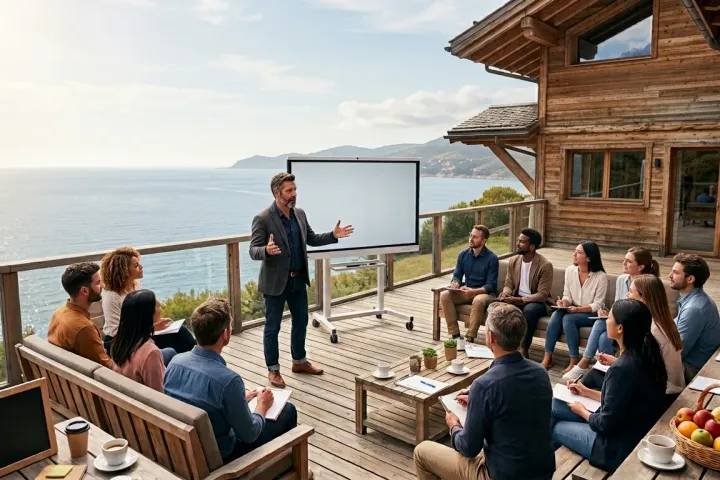
1 course
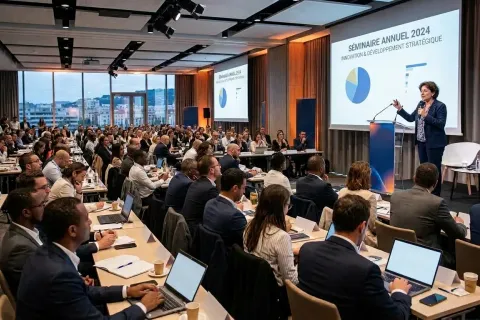
Team coaching programme
Where a seminar settles a question in two days, team coaching changes how a group works over four to six months. Several sessions with real work between them, aimed at habits rather than at a single decision.
- Give the team a shared objective
- Give the work meaning and motivate the team
Some problems cannot be trained out of individuals one at a time. A leadership team that quietly disagrees about where the company is going, a department that has split into two camps, a group that has grown fast and never actually decided how it works — those need the whole group in one room, with someone outside the hierarchy holding the process.
That is what these formats are for. A seminar is a single intensive session, usually one or two days, built around a specific question the team has been circling. Team coaching is longer: several sessions over months, with work between them, aimed at changing how a group operates rather than aligning it once.
Both are facilitated, not taught. The content comes from the team; our job is to make the difficult conversation possible, keep it productive, and make sure it ends in decisions someone owns. We say no to requests for a purely recreational offsite — that is a good thing to do, but it is not this.
Organisations that have called on ABP Consulting

























Frequently asked questions
What is the difference between a seminar and team coaching?
A seminar is one intensive session, typically one or two days, focused on a question the team needs to settle. Team coaching runs across several sessions over months, with work between them, and aims to change how the group operates rather than resolve a single question.
How large can a group be?
Cohesion and vision seminars work best between six and eighteen participants. Above that, the format shifts and not everyone gets to speak, which defeats the purpose. Larger groups can be split, with a plenary session to bring the threads back together.
Is this a team-building activity?
No. Recreational team-building has its place, but this is facilitated work on a real question the team has been avoiding or cannot resolve alone. Participants should expect to do something uncomfortable and leave with decisions, not with photographs.
What happens if the real problem is one person?
It comes up, and the group format is usually the wrong place to address it. Where that is the situation we say so and propose individual coaching alongside or instead, rather than running a collective session that everyone knows is aimed at one participant.
Where do these sessions take place?
Usually offsite rather than in your own meeting rooms, because a change of setting measurably changes how candidly people speak. We do not provide the venue, but we will advise on what kind of space the format needs.